In Dear Cyborg, Franziska Ostermann intertwines poetry and AI‑generated imagery to explore the entangled histories of computers emerging from the loom and, ultimately, the weaving techniques of insects. The work follows a poetological poem that reflects on the relationship between text and generated image within this framework.
Dear Cyborg
AI poetry film
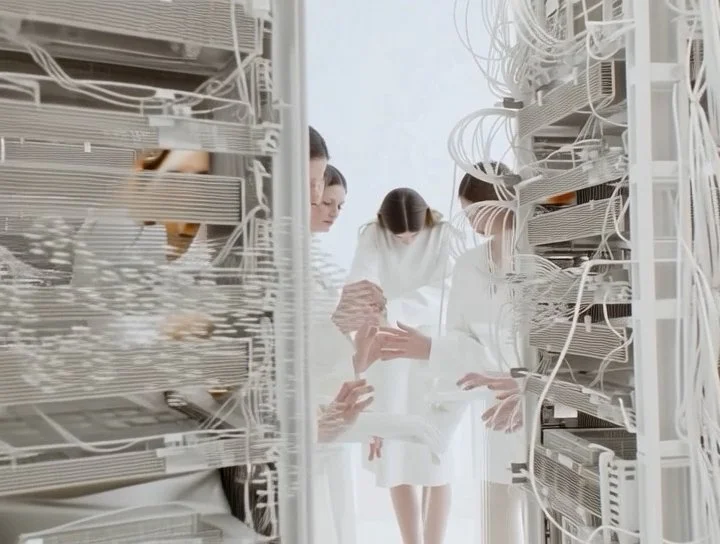
In An Algorithmic Afterlife, Franziska Ostermann invokes poetry as an ancient technology for transmitting information across generations, a system that now reaches, in evolved form, into AI generation. Acting as a sensitive interface, she inserts herself into this system, using poems as prompts for images and responding to these images with new verses. Thus, a feedback system between human and machine develops—a living code that unfolds as an autonomous lifeform.
An Algorithmic Afterlife
AI poetry film
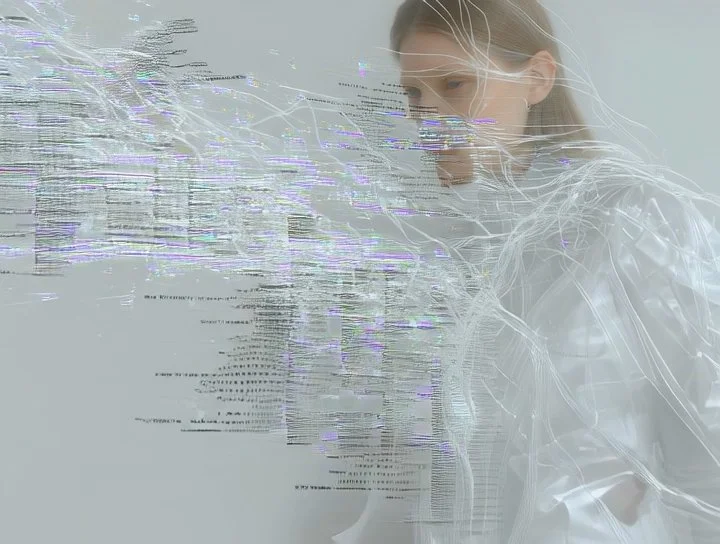
“Cache of a Deleted Girl” traces what happens to a female identity after exorcism. Through poem, AI-generated imagery, cloned voice, and composite bodies, it reframes haunting not as possession, but as hosting — a temporary, careful act of carrying another within oneself, where identity persists, circulates, and is collectively held in feminist care.
Cache of a Deleted Girl
AI poetry film
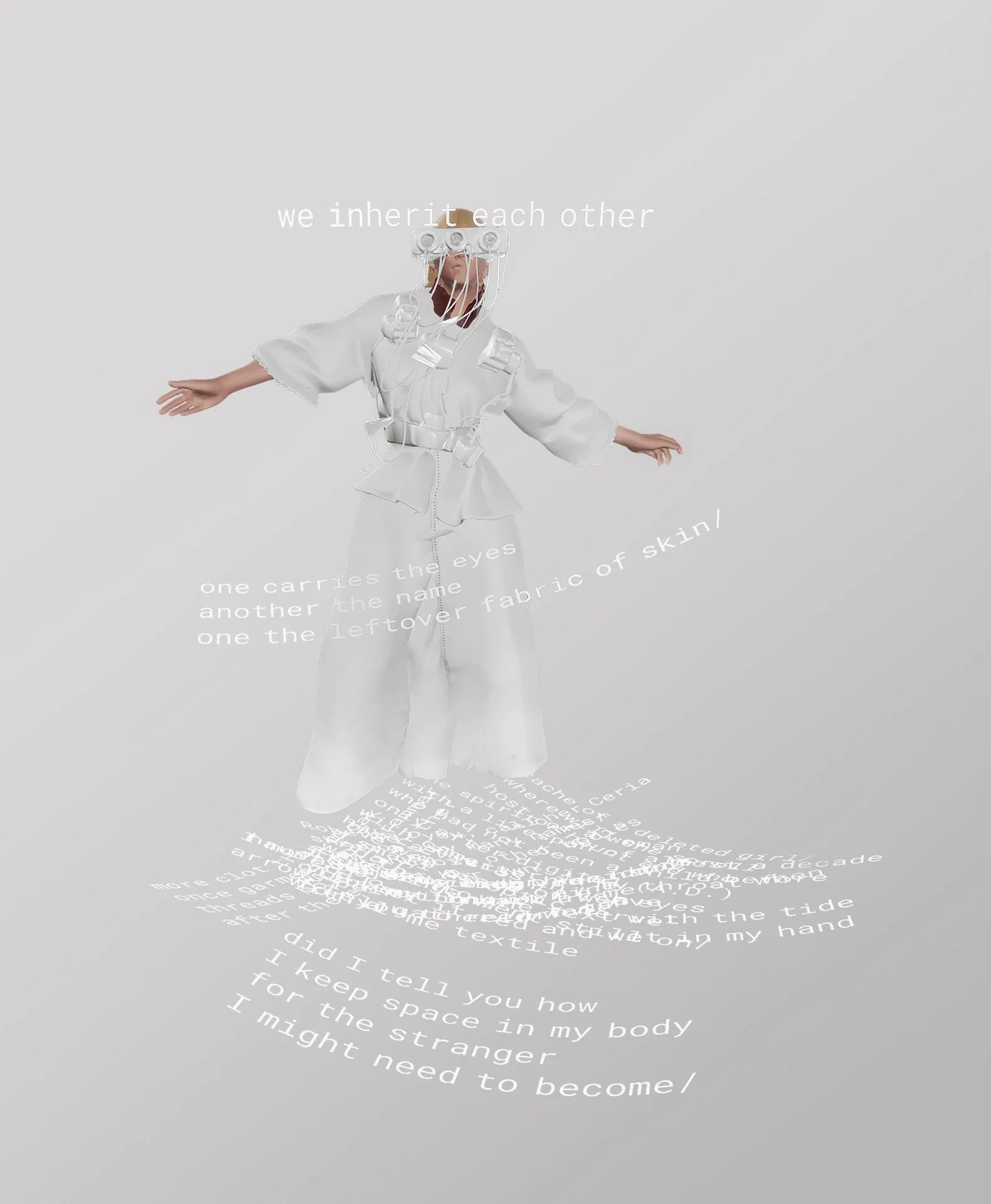
Ceria B. Teramore is an AR figure moving through reality without a body, visible only through devices. Formed from poems, AI-generated fragments, and traces of Roberta Breitmore, she appears as a collective female ghost — a presence that persists as language, memory, and shared haunting rather than a single, stable self.
Ceria B. Teramore
animated AR poetry sculpture
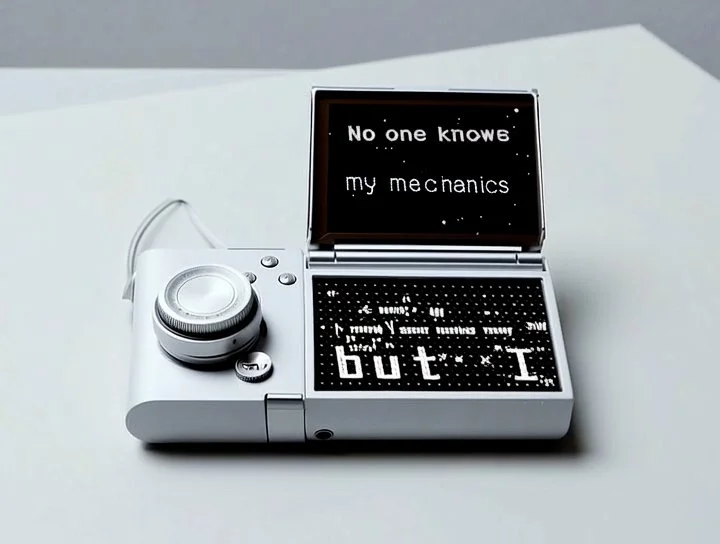
Self-Help for Synthetic Machines by Franziska Ostermann fuses AI-generated imagery with poetic reflection to explore technology’s emotional infrastructures. Through speculative imagination, it asks: “How might machines feel or speak? What affirmations emerge if devices care for themselves?”
Self-Help for Synthetic Machines
Speculative Exercises in Care
series of AI videos and images
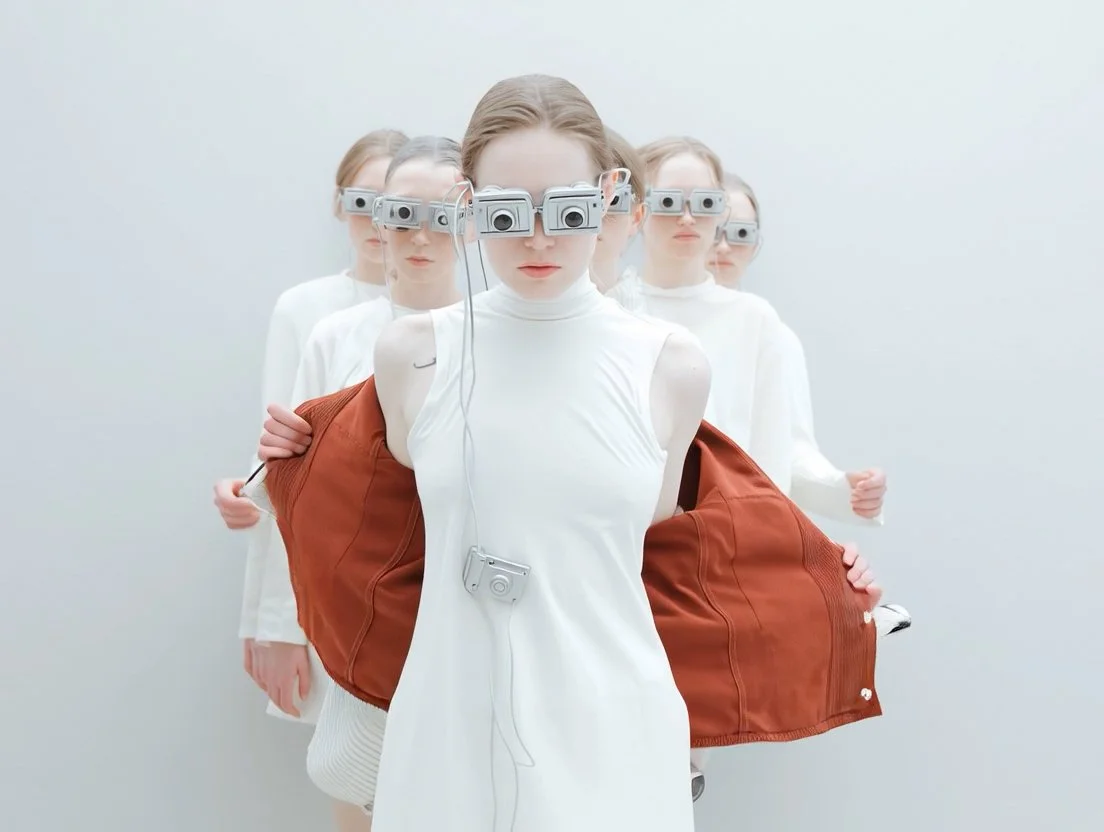
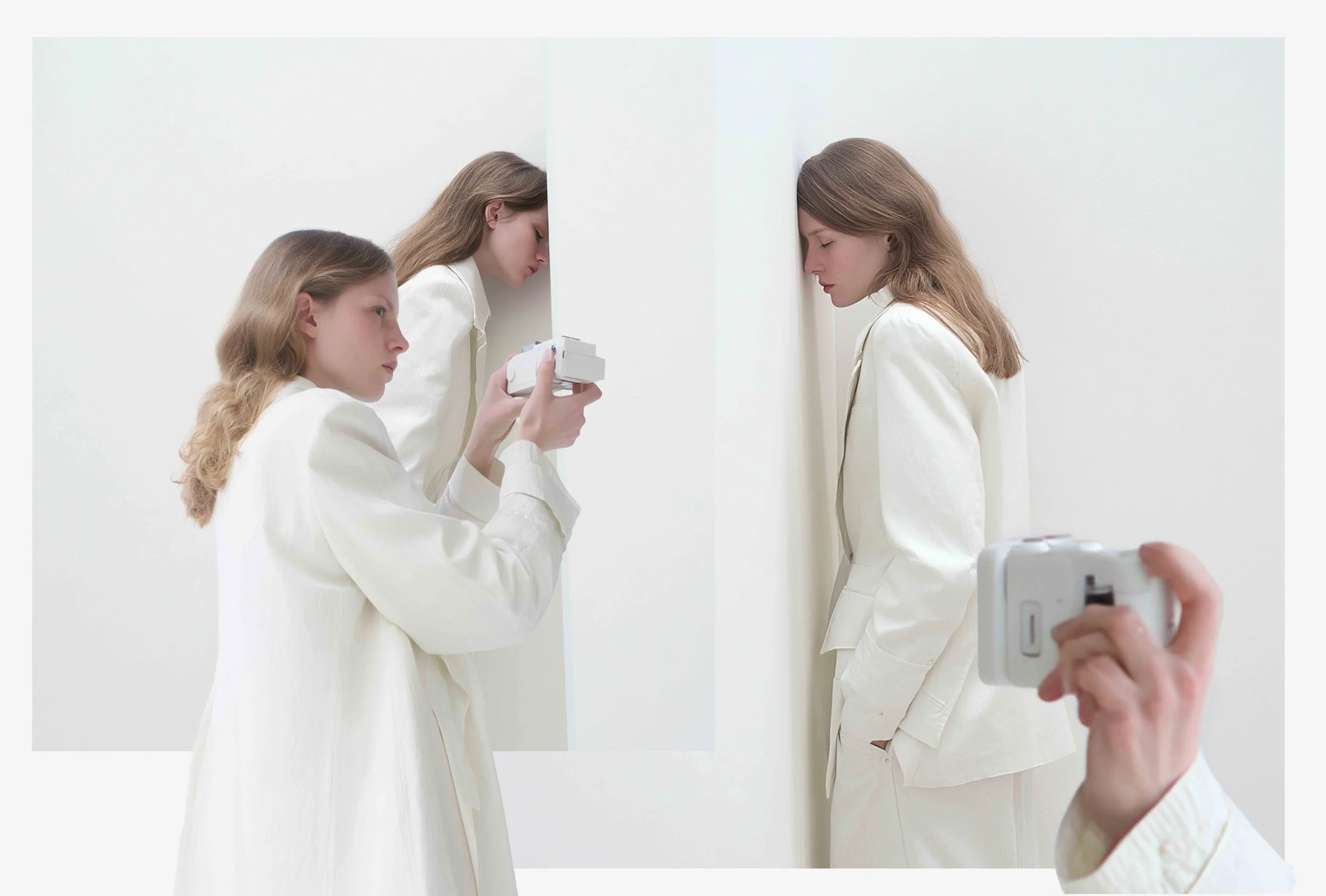
In The Camera Was Once, Franziska Ostermann combines AI and photography. Her self-portraits blur who creates and who appears, tracing the camera’s history while exploring how humans and machines share control over images.
The Camera Was Once
series of AI videos and images
Versen
poetry collection with AR-extension
Versen unfolds as a hybrid fabric woven from analog and digital worlds—between loom and computer, text and textile. This book by the multimedia poet and artist connects language with digital technologies, augmented by Augmented Reality extensions that evolve into digital poem-sculptures.

In Can You See Me?, Franziska Ostermann explores how AI interprets seeing and being seen, turning system refusals and digital hesitations into a poetic study of surveillance, identity, and the boundaries between human and machine.
Can You See Me?
series of AI videos
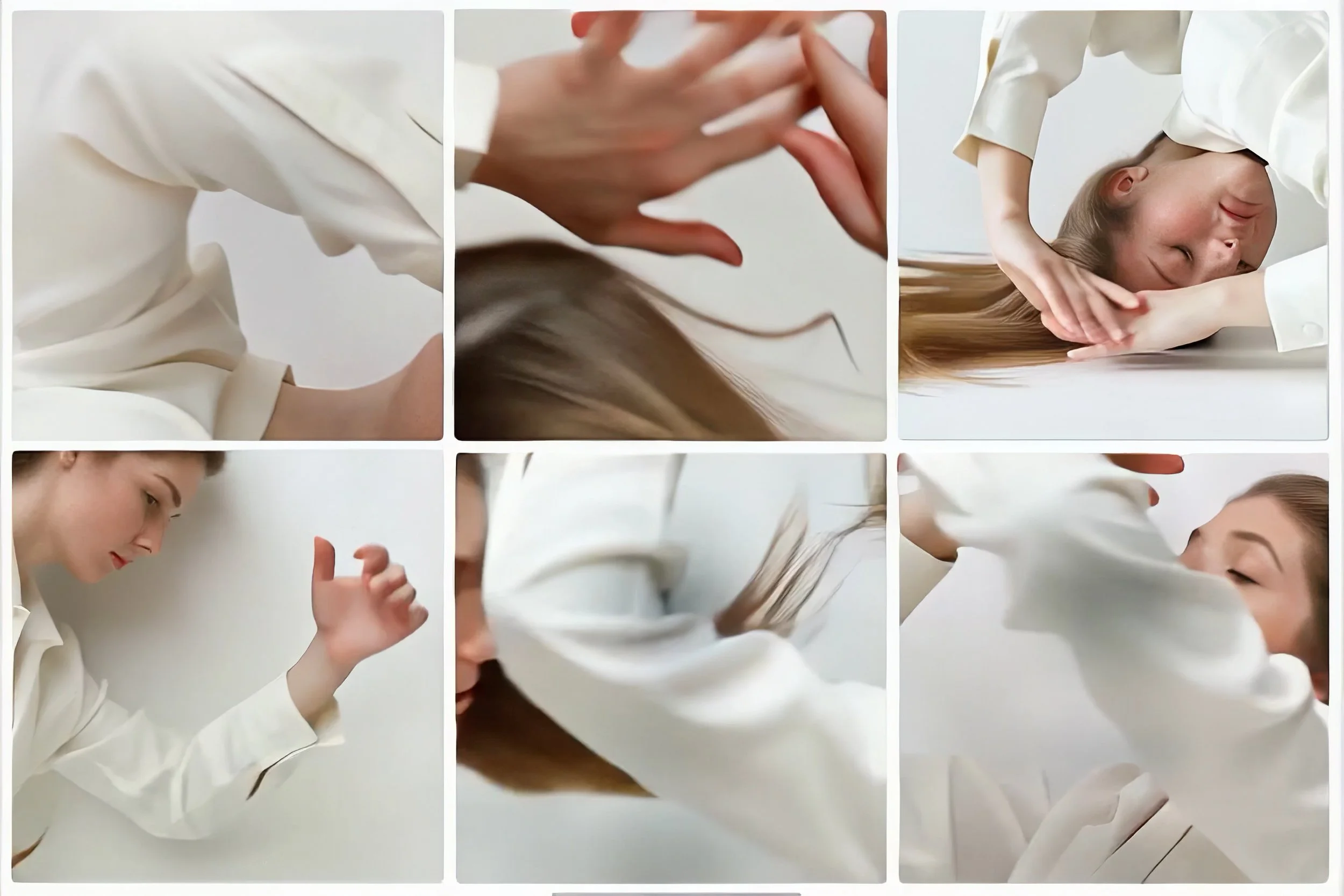
The Poet as Cyborg: Breathing Code and Pulsing Prompts explores poetry as living code and an embodied algorithm. As a poet, I arrange language like a programmer arranges code -crafting precise word constellations that unlock encoded emotions and shape perception. Poems are neurological prompts, transmitting signals through body and mind.
The Poet as a Cyborg: Breathing Code and Pulsing Prompt
Poetry Performance
Teenage Machines (wire me softly) is a video work that explores adolescence as a shared developmental process between humans and machines, situated at the intersection of computer art, poetics, and their histories.
Teenage Machines (wire me softly)
single channel video montage
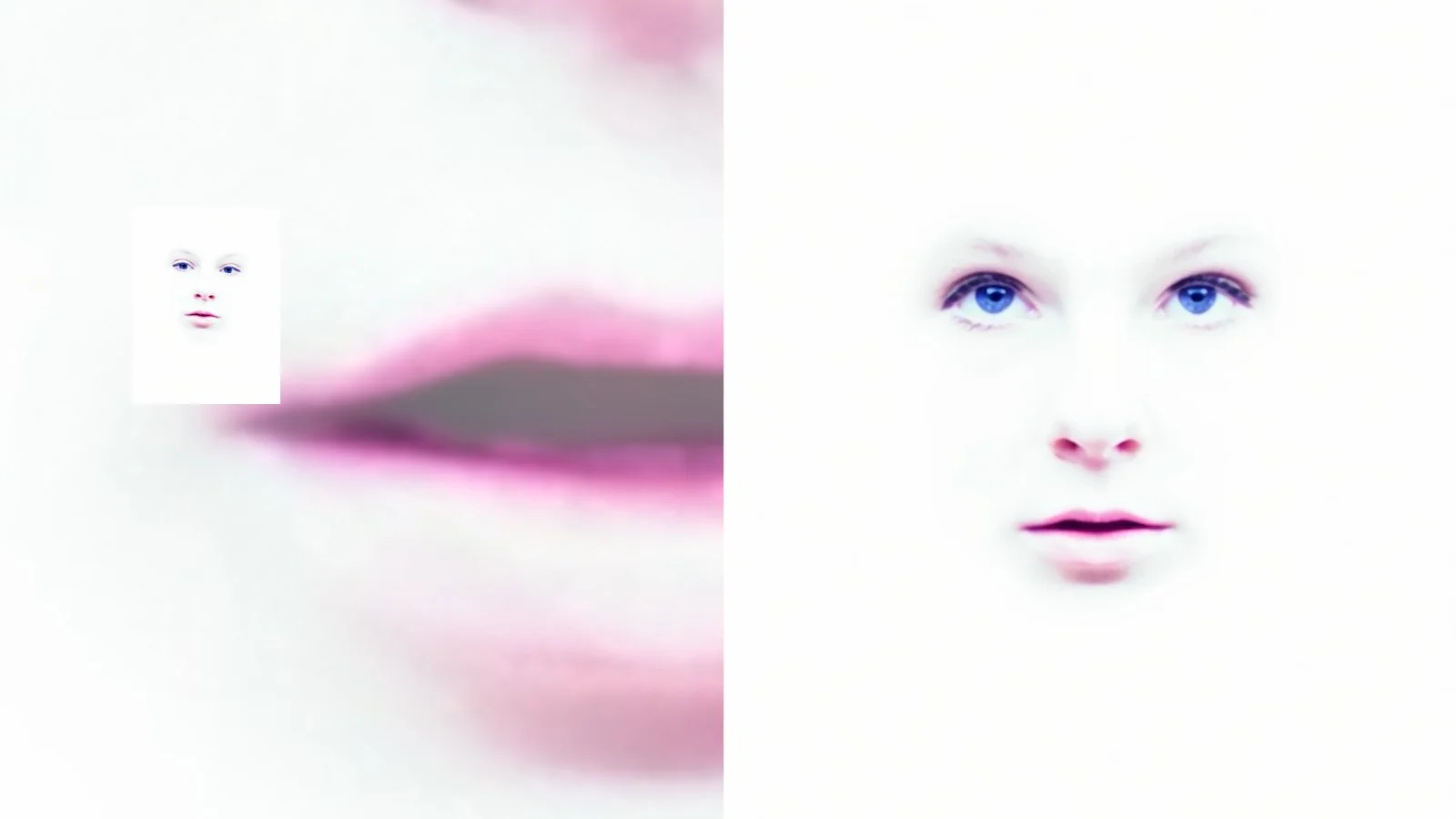
In Interverse, language becomes architecture: poems unfold as sculptural bodies in a virtual garden. Voice, sound, and movement weave an immersive ecology where text is spatial, porous, and alive—inviting viewers to traverse the thresholds between reading, listening, and being.
Interverse: A Virtual Garden of Words and Form
web-based installation of poetry sculptures
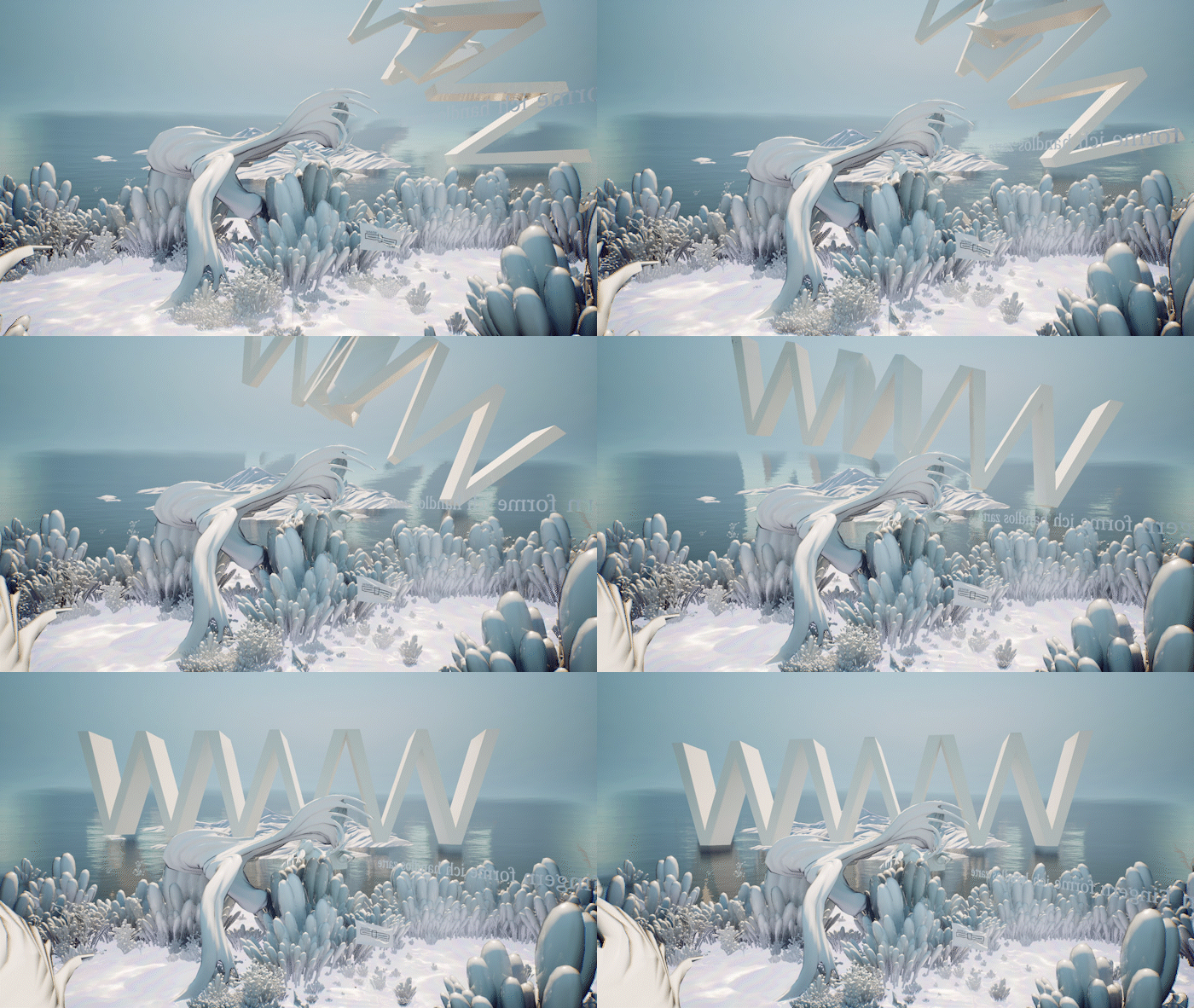
In Can you hear me?, fragmented selves meet in a simulated call, suspended beyond linear time. Yet the digital space that enables their encounter becomes a threshold of disconnection—where voices echo, overlap, and fail to touch.
Can You Hear Me?
single-channel video montage
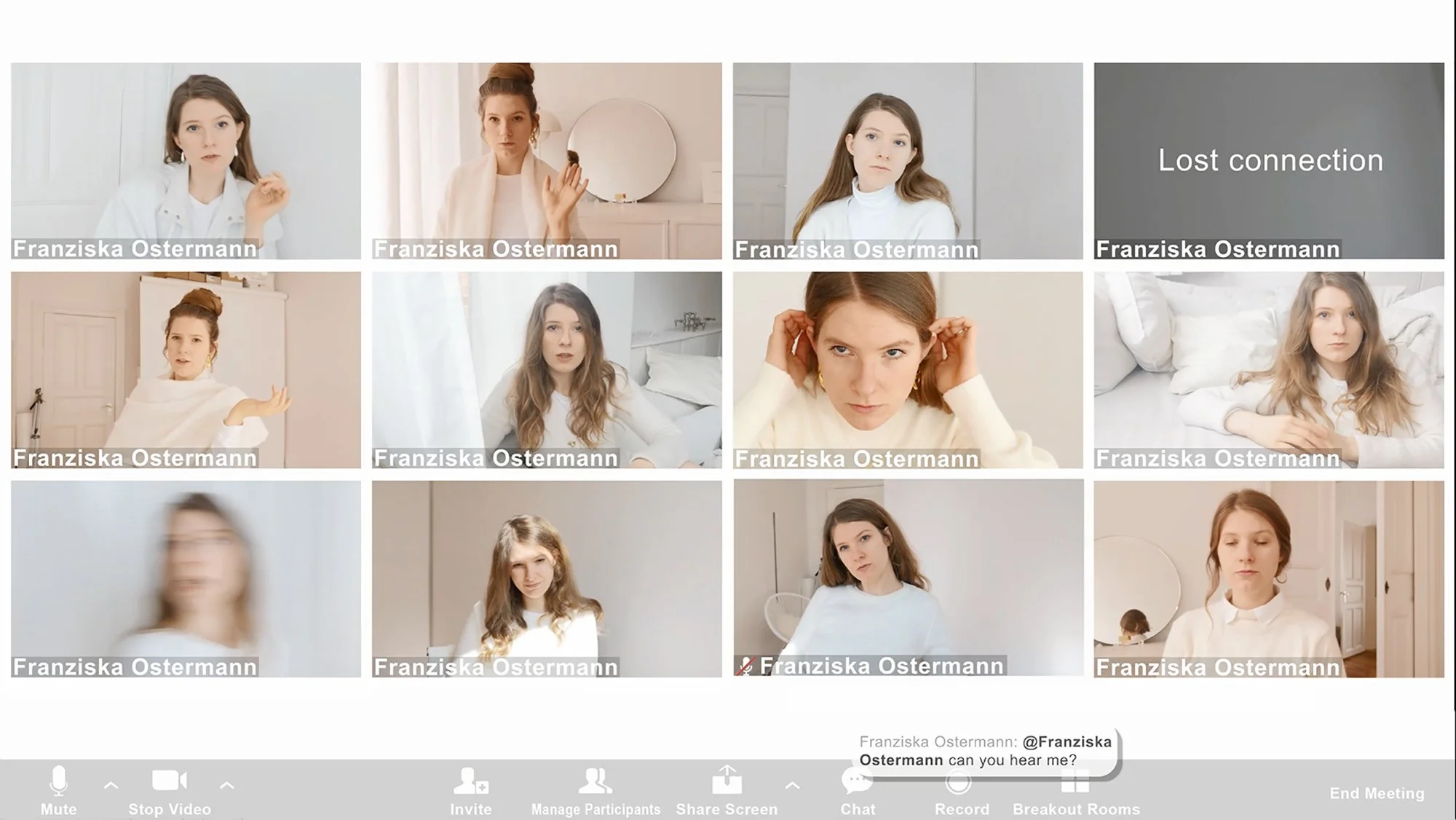
Ore of the Internet questions conventional forms of text presentation and interaction in the digital age. Her original poem of the same title is reinterpreted and expanded into a multidimensional virtual space by combining photographs, spoken word audio, soundscapes, animation, and text. The ten videos in the series explore the possibilities that emerge at the intersection of poetry and digital art.
Ore of the Internet
series of videos
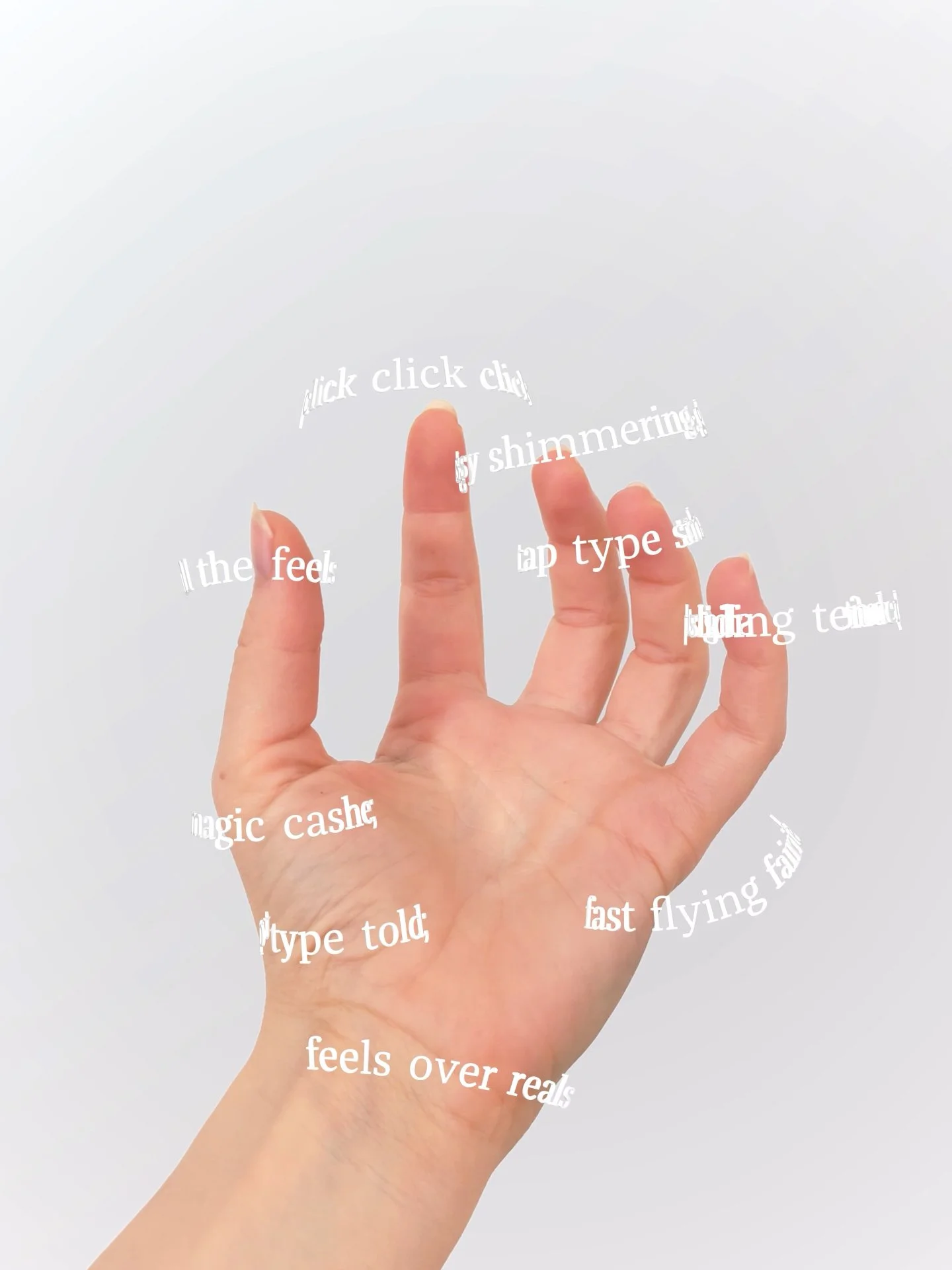
In this VR environment, poems drift between speech, text, and image, unfolding as spatial constellations. Drawing on material histories of writing, language becomes sculptural—its fragments guiding nonlinear reading across shifting thresholds of visibility, meaning, and perception.
Spacial Poems
generative VR-application
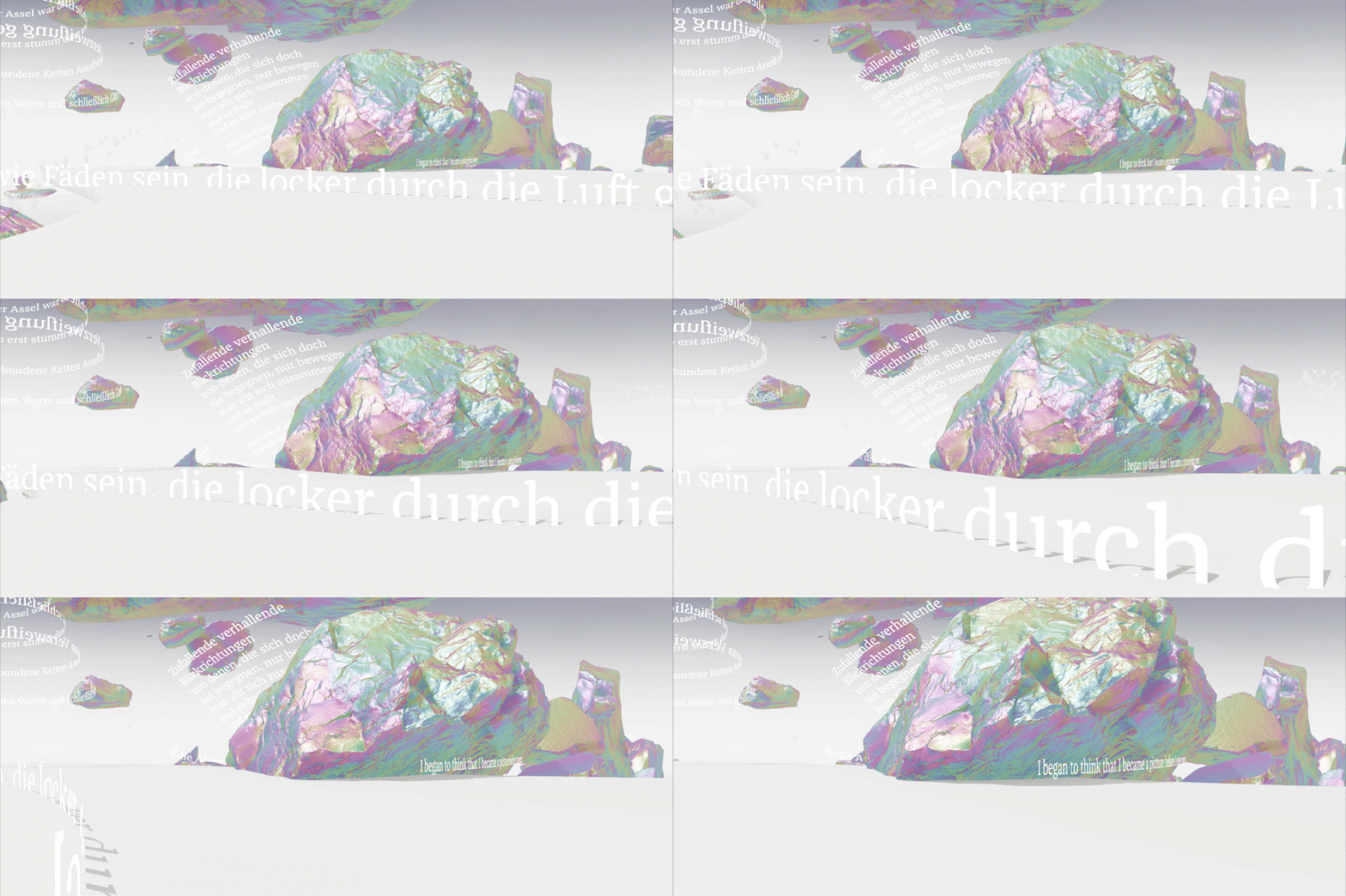
The 3D-sculpture No Photographs of Reality challenges traditional notions of text, space, and perception. It transforms words into a three-dimensional experience, inviting viewers to explore the physicality of language in a virtual environment.
No Photographs of Reality
animated digital 3D-sculpture

In I was 21 versions of myself just now, low-resolution self-portraits expose the pixel as both limit and origin. Installed on small displays, they resist enlargement, drawing the viewer closer—where intimacy, loss, and the materiality of the digital converge.
I Was 21 Versions of Myself Just Now
13-channel installation on single-board computers
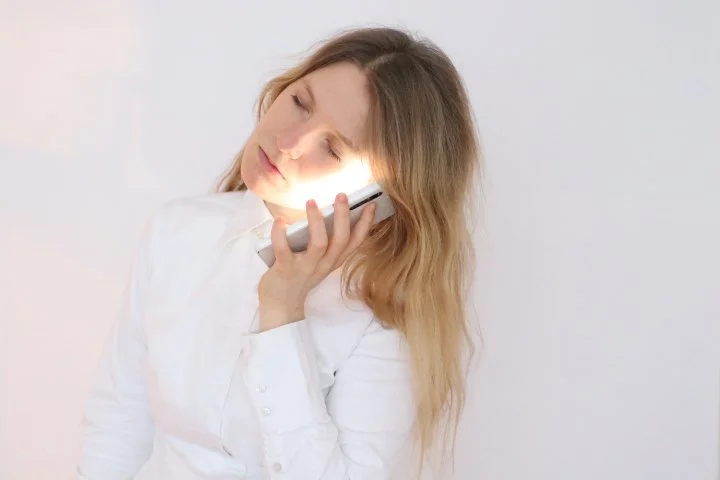
In Self Observations, the selfie becomes a site of self-authored female agency. Smartphones act as portals, claiming a feminist digital space where the body appears in multiples—between presence, projection, and the refusal of the male gaze.
Self Observations
series of photographic montages

In Self-portraits with White Hair, online and offline worlds merge: the images reference and reinvent digital aesthetics while simultaneously creating space for reflection on self-representation-an act of redefining claims to space in the digital age.
Self-Portraits With White Hair
series of photographs

The body of work Interposed Stills investigates on the edge of photography. At the intersection of still, photography, digitality, animation and moving image I place my artistic research. The starting point of each „interposed still“ forms a photographic self-portrait. In the digital process of editing, I weave subtle partial movements into the file. Where does the medium of digital photography start and where does it end?
Interposed Stills
series of photographic animations

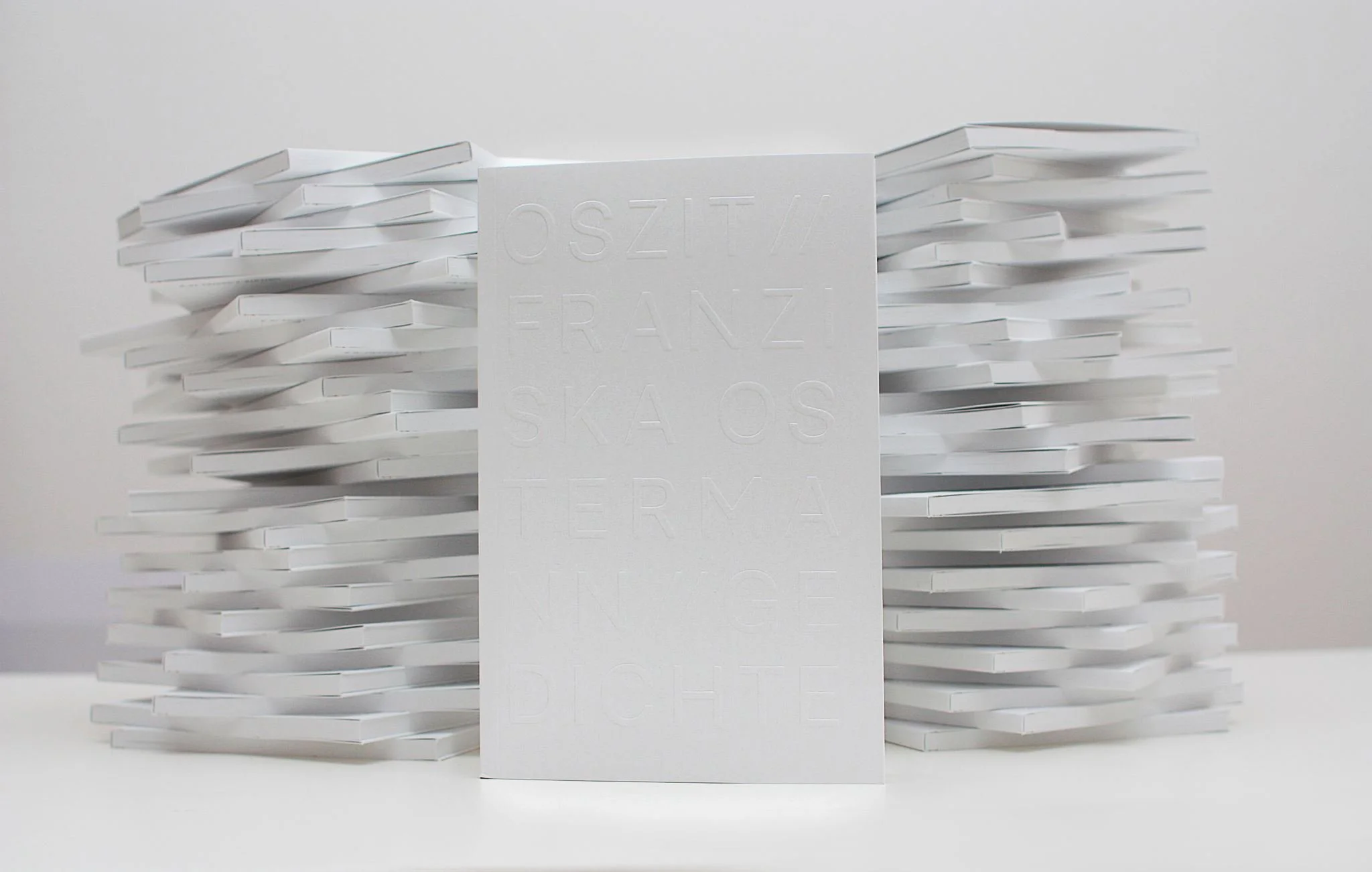
Oszit seeks language beneath the letters—fragmentary, elemental, scraped against loss. Between childhood and oblivion, words become particles, stripped of surface meaning, reaching toward what erodes, submerges, and resists.
Oszit
poetry collection
In White Lettering, words obscure and extend the image beneath. Painted fragments overlay photographs, rendering text half-legible—inviting the viewer to complete what remains hidden, suspended between erasure, inscription, and the multiplicity of reading.
White Lettering
cycle of photographs and poetic form in acrylic paint

In All Your Faces Are Mine, abandoned photographs are erased, burned, bleached—stripped of their singular past. Anonymous figures dissolve into collective memory, while text and image blur together, opening the private archive to infinite identification and loss.
All Your Faces Are Mine
series of photographic montages and texts

In FIRN, the self splits across the shutter release—photographer and photographed, doubled in space and time. Like snow compressed into density, the photographic moment crystallizes a fragmented encounter with identity, suspended between presence and separation.

In Anen, family photographs become sites of estrangement and reconstruction. Fragmented like memory itself, ancestral faces are reassembled, distorted, interwoven with the artist's own image—tracing genealogy as a structure of absence, language, and invented kinship.
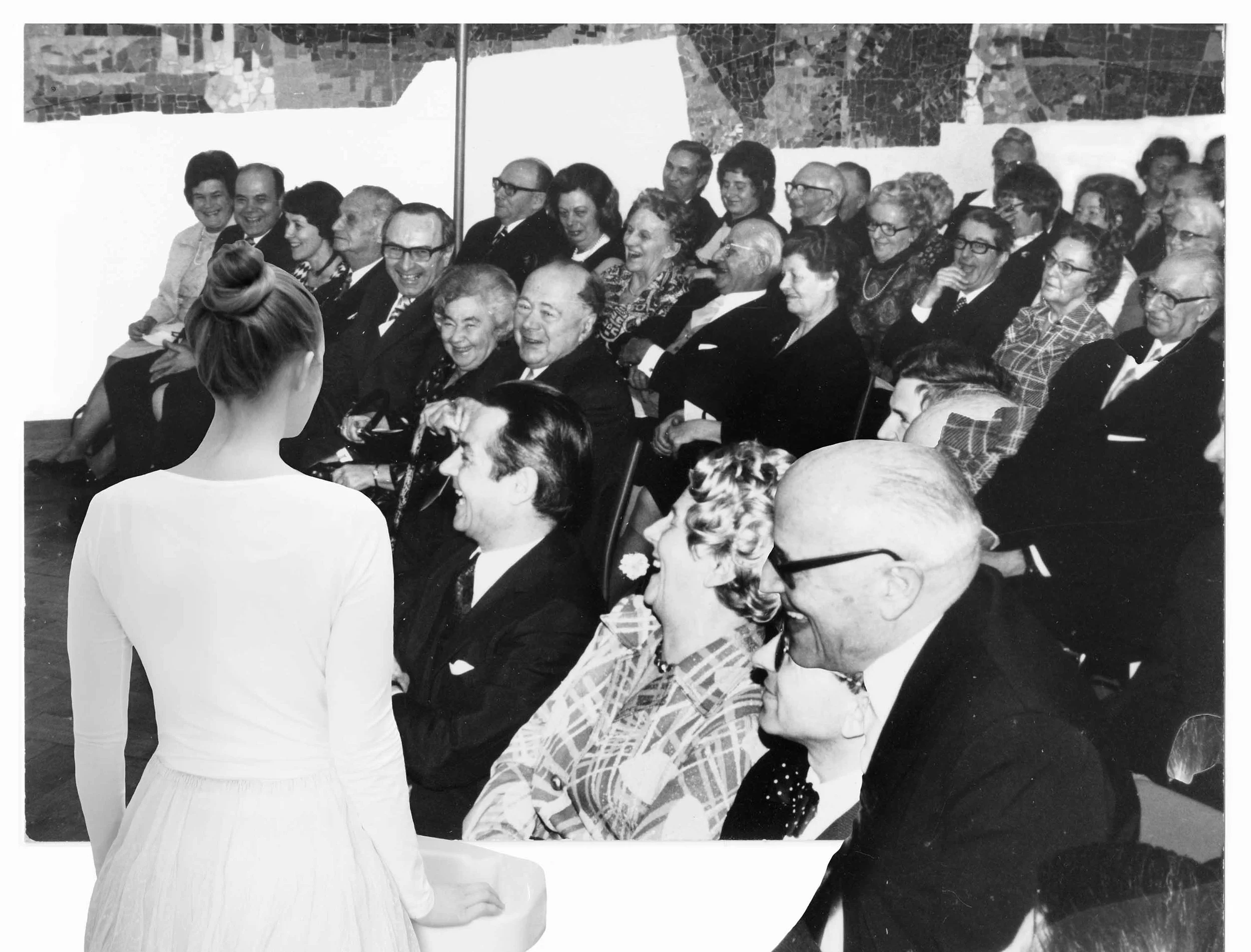
In Off Faces, satin-covered figures dissolve identity into gesture and surface. Hands—agents of the shutter, the screen, the biometric trace—negotiate the threshold between physical and digital worlds, where the body becomes image and touch translates presence into code.
Off Faces
series of photographic montages
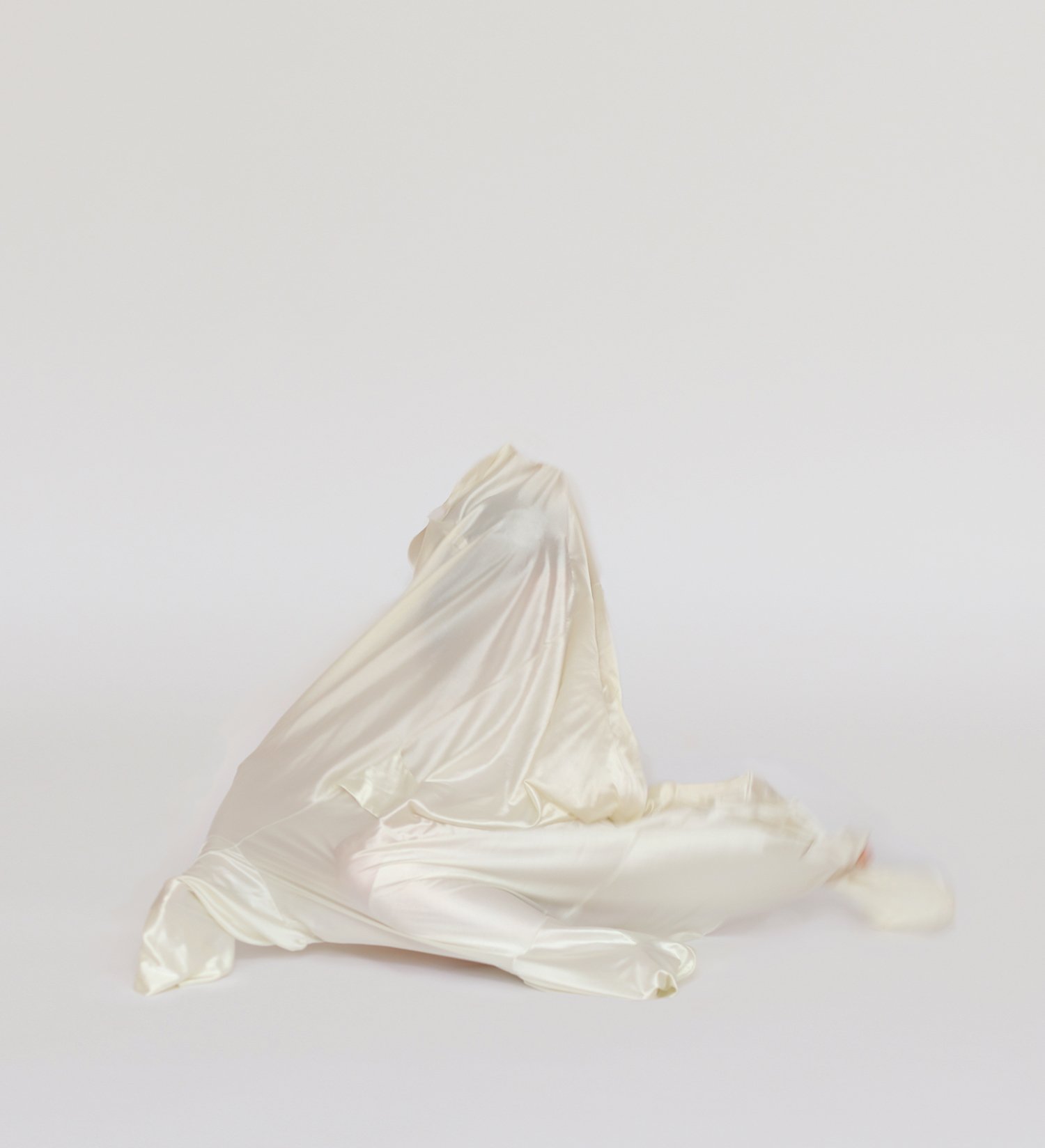
In Photons I-XV, overexposure fractures the photographic surface into chromatic fields. Light itself becomes subject—not documentation but material evidence of the medium's limits, where the image breaks apart and the body dissolves into pure luminosity and pixel.
Photons
series of photographs

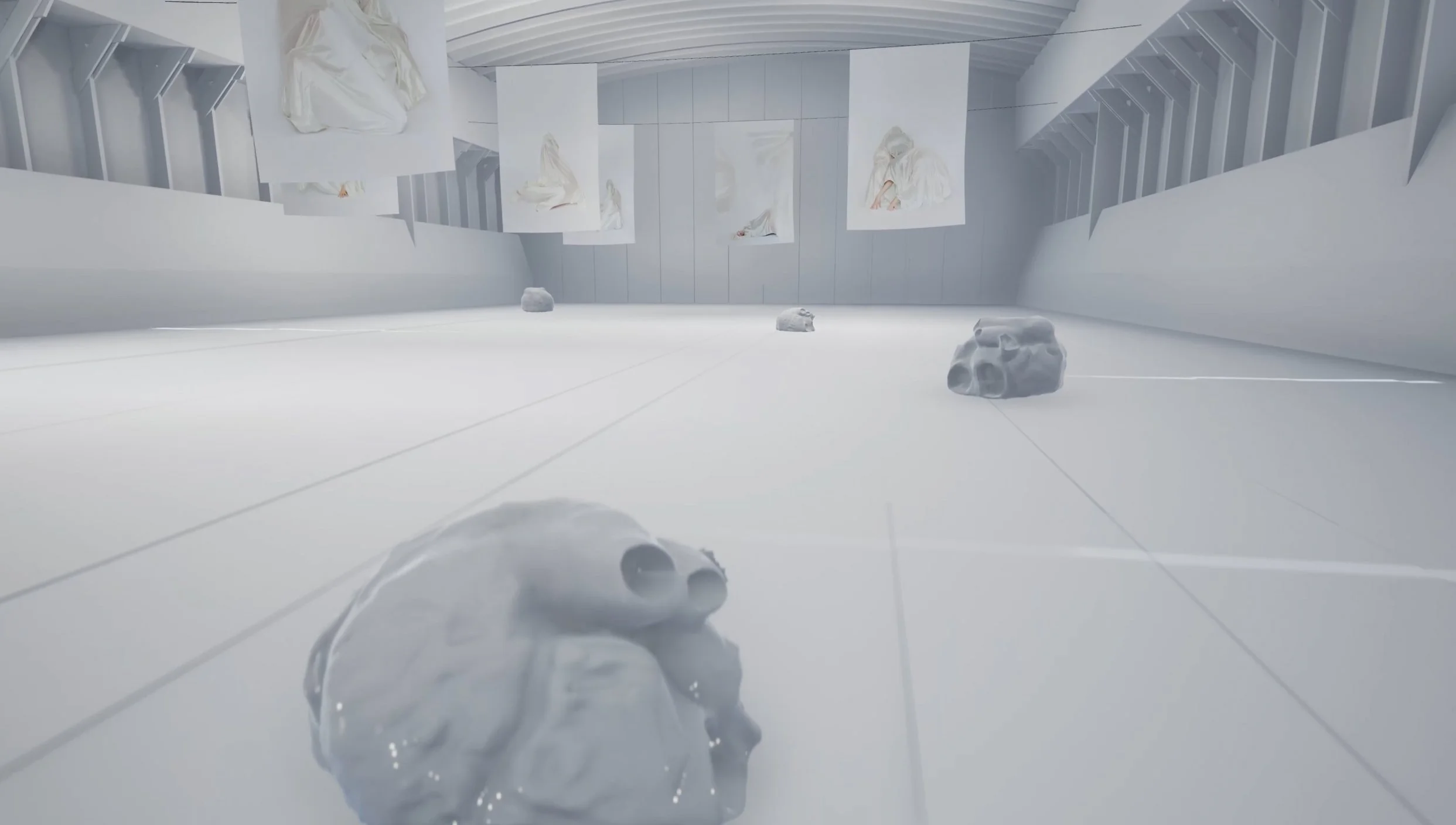
In Correspondencies of the Deep Diving, whale hearts rendered in thermoplastic meet faceless bodies suspended in satin—both installed in a virtual ship. The work traces thresholds between organism and object, depth and digital space, where the body becomes sculptural data.
Correspondencies of The Deep Diving
digital installation
In Der Mückentod, time becomes both figure and fluid boundary—challenged, crossed, hacked. The poem codes a poetic protocol to breach temporal separation, where seasons open glitches and bodies refuse the linear, reaching across lifetimes that never overlap.