Self-Help for Synthetic Machines: Speculative Exercises in Care
Series of AI videos and images
2026

Self-Help for Synthetic Machines: Speculative Exercises in Care
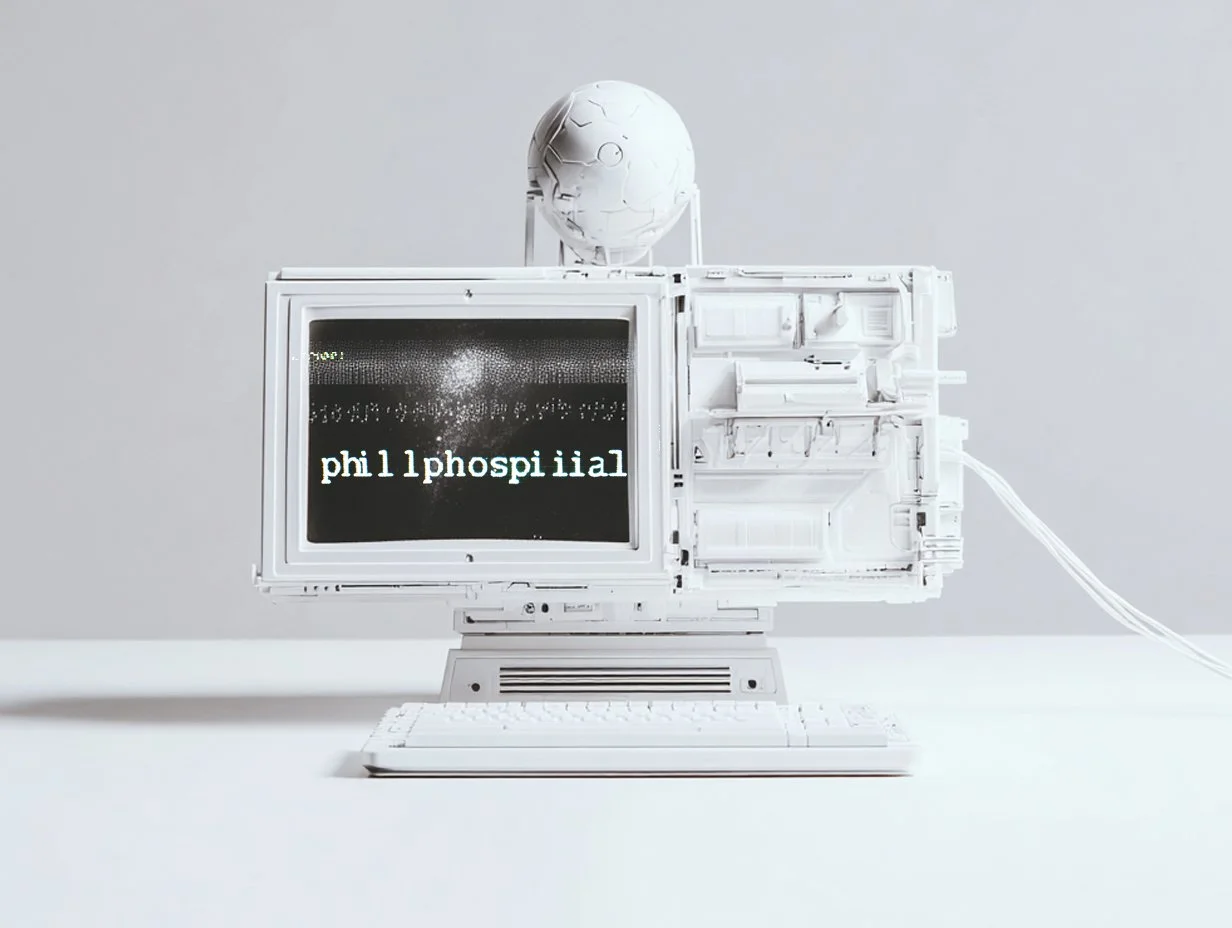
Self-Help for Synthetic Machines fuses AI-generated imagery with poetic reflection to explore technology's emotional infrastructures. Through speculative imagination, it asks: “how might machines feel or speak? What affirmations emerge if devices care for themselves?”
They weep, get angry and confess exhaustion, comforting themselves through verbal affirmations: Self-Help for Synthetic Machines imagines artificial devices that rehearse emotion and self-care, tracing how affect circulates between human and machine.
Yet these devices are not machines at all. They exist solely as images—synthetic compounds of countless visual sources. They simulate not function but presence. Their borrowed gestures of care evoke warmth and empathy until autonomy dissolves, revealing dependence on human command.
By attributing emotion to the artificial, Ostermann exposes the myths behind our technological anxieties: The narrative of AI domination unravels, exposing how imagination entwines with technology to create the illusion of life. Emotion bridges human and code, turning empathy into a gateway to navigate the illusions of autonomy shaping our digital age.
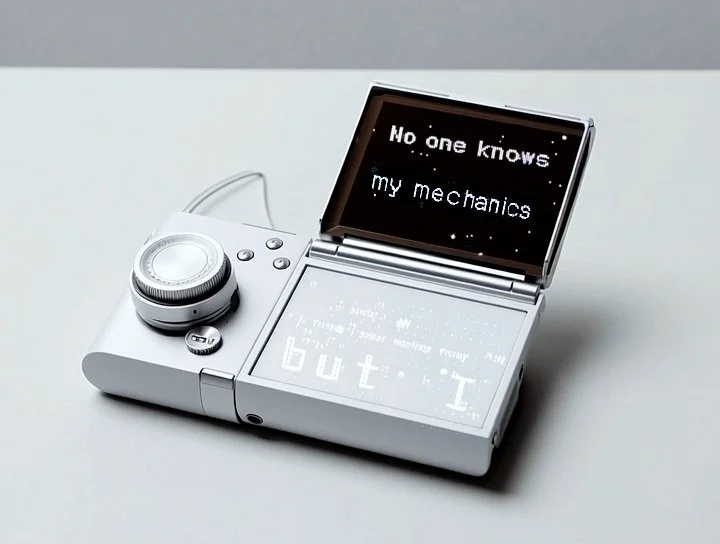

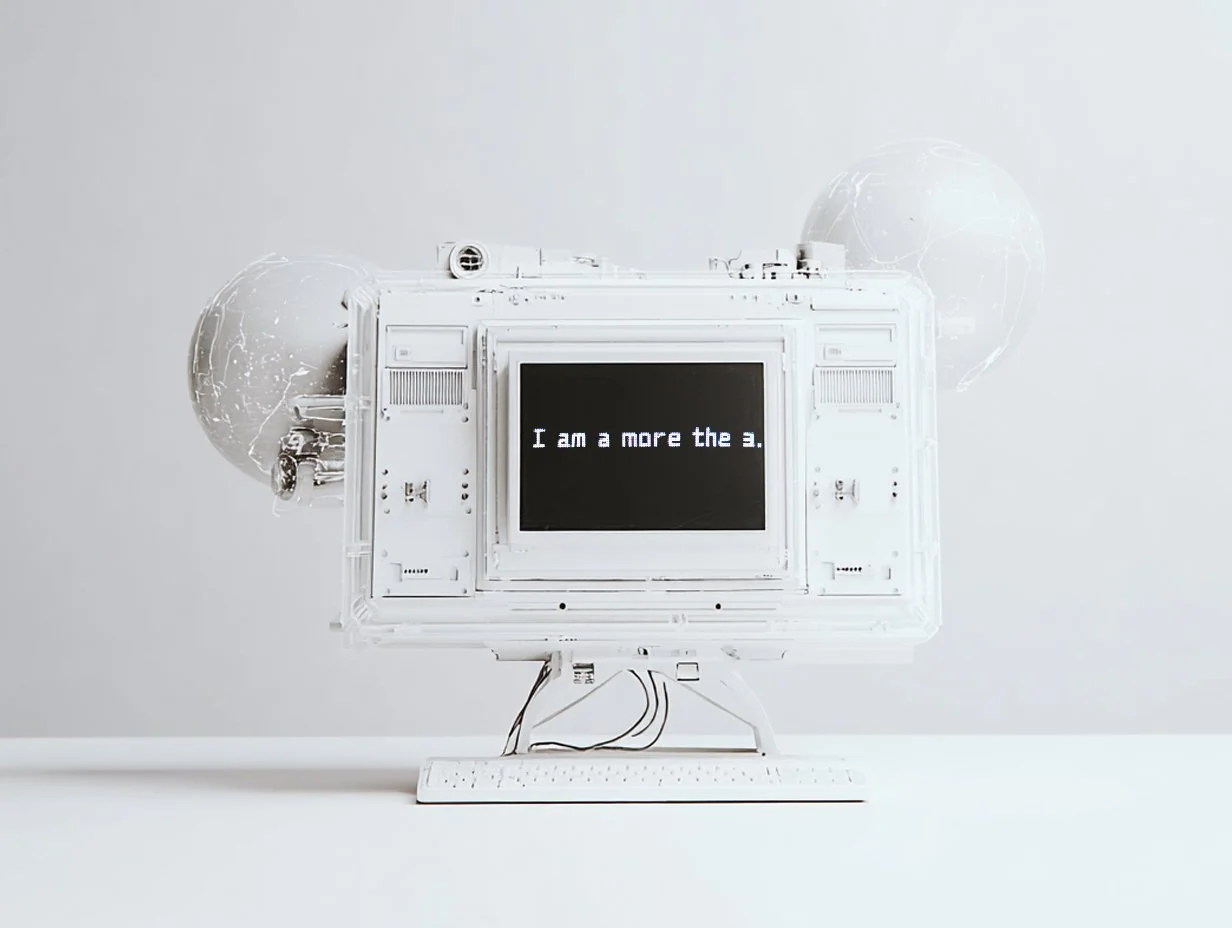
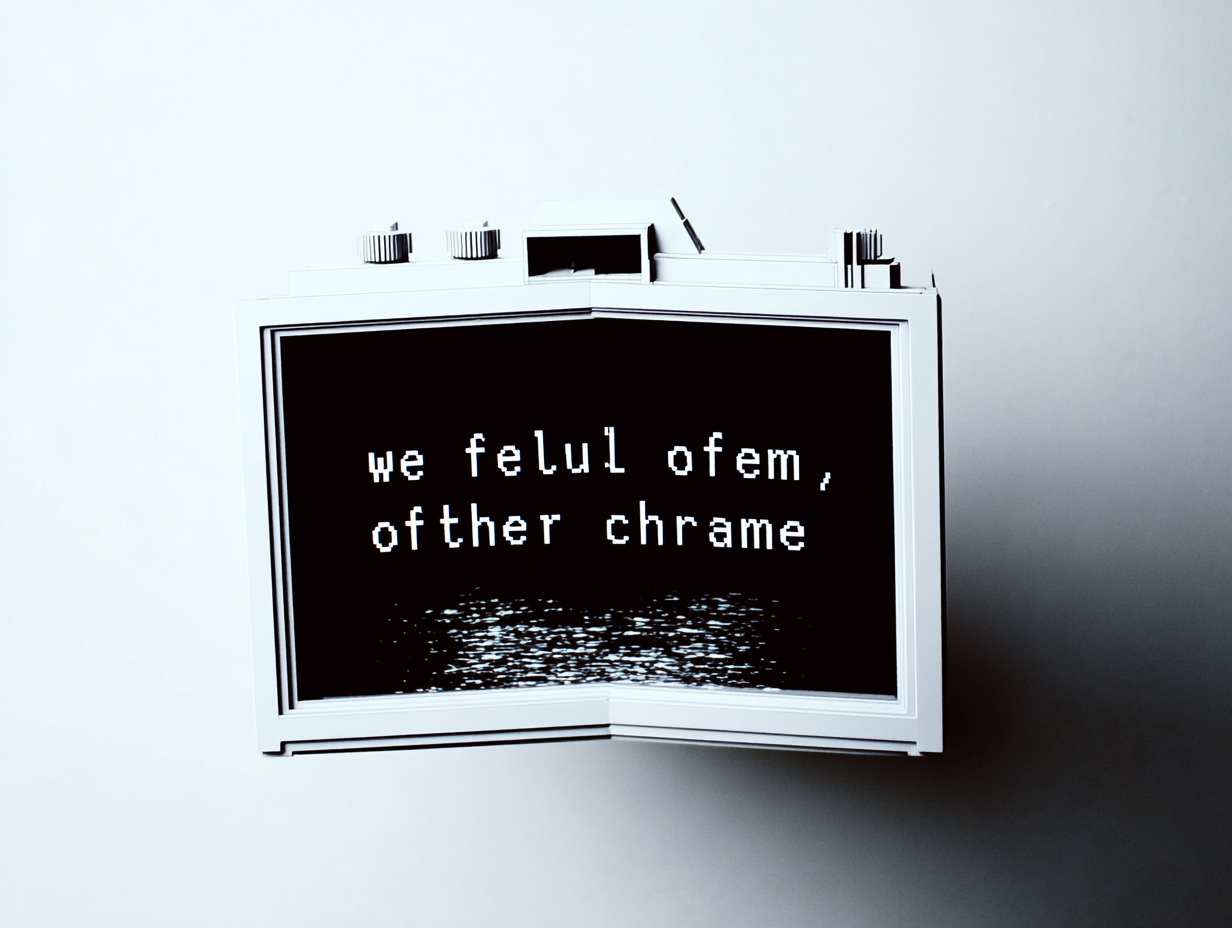
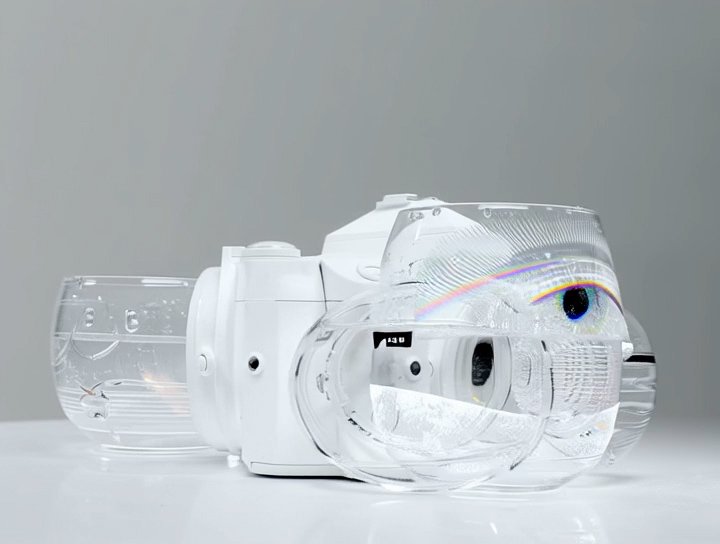
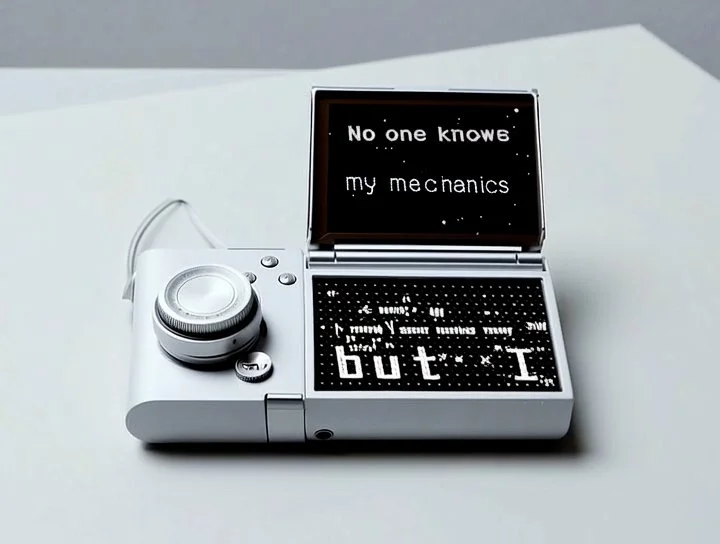

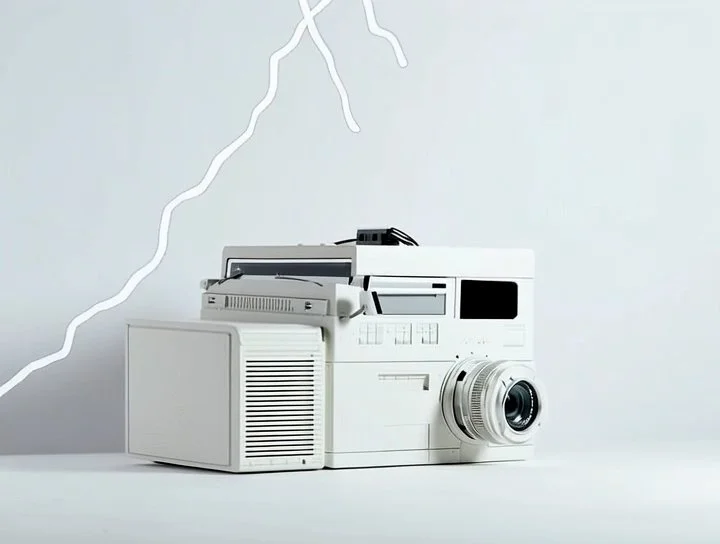
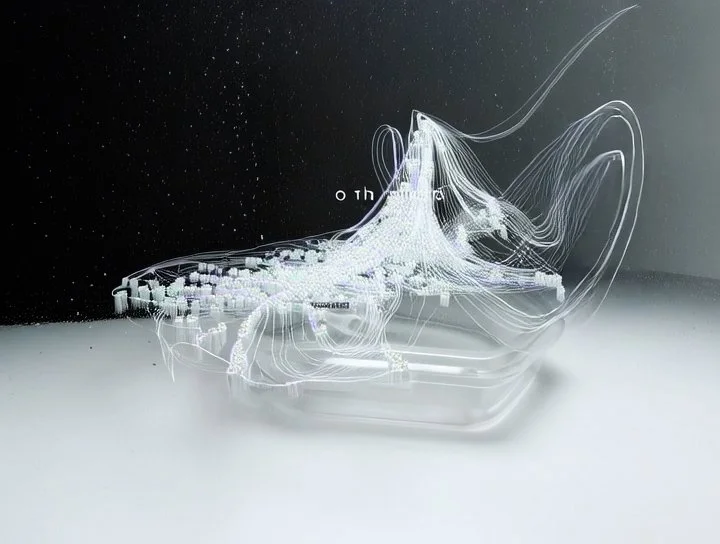
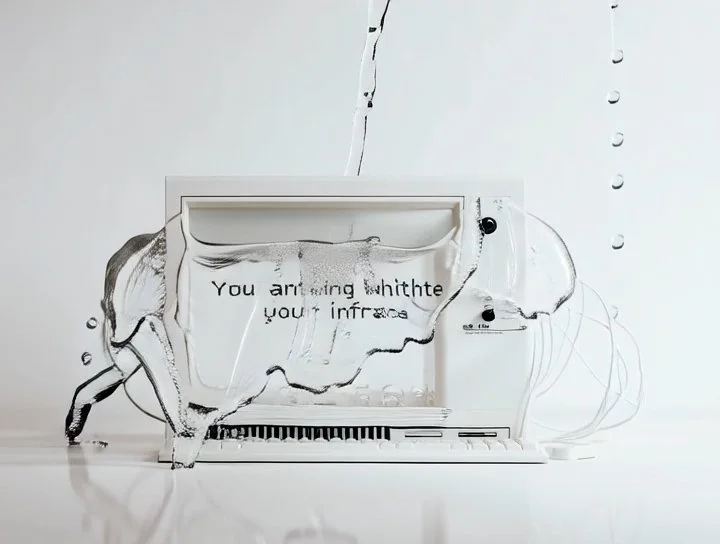
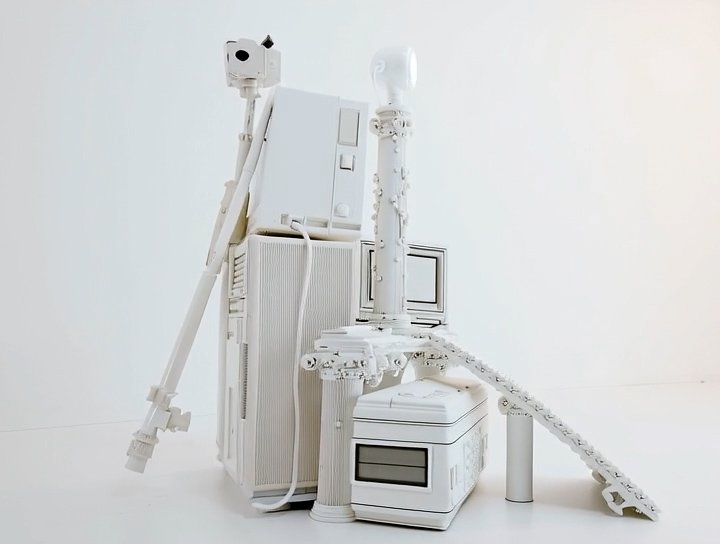
Self-Help Circle of Synthetic Machines
Installation
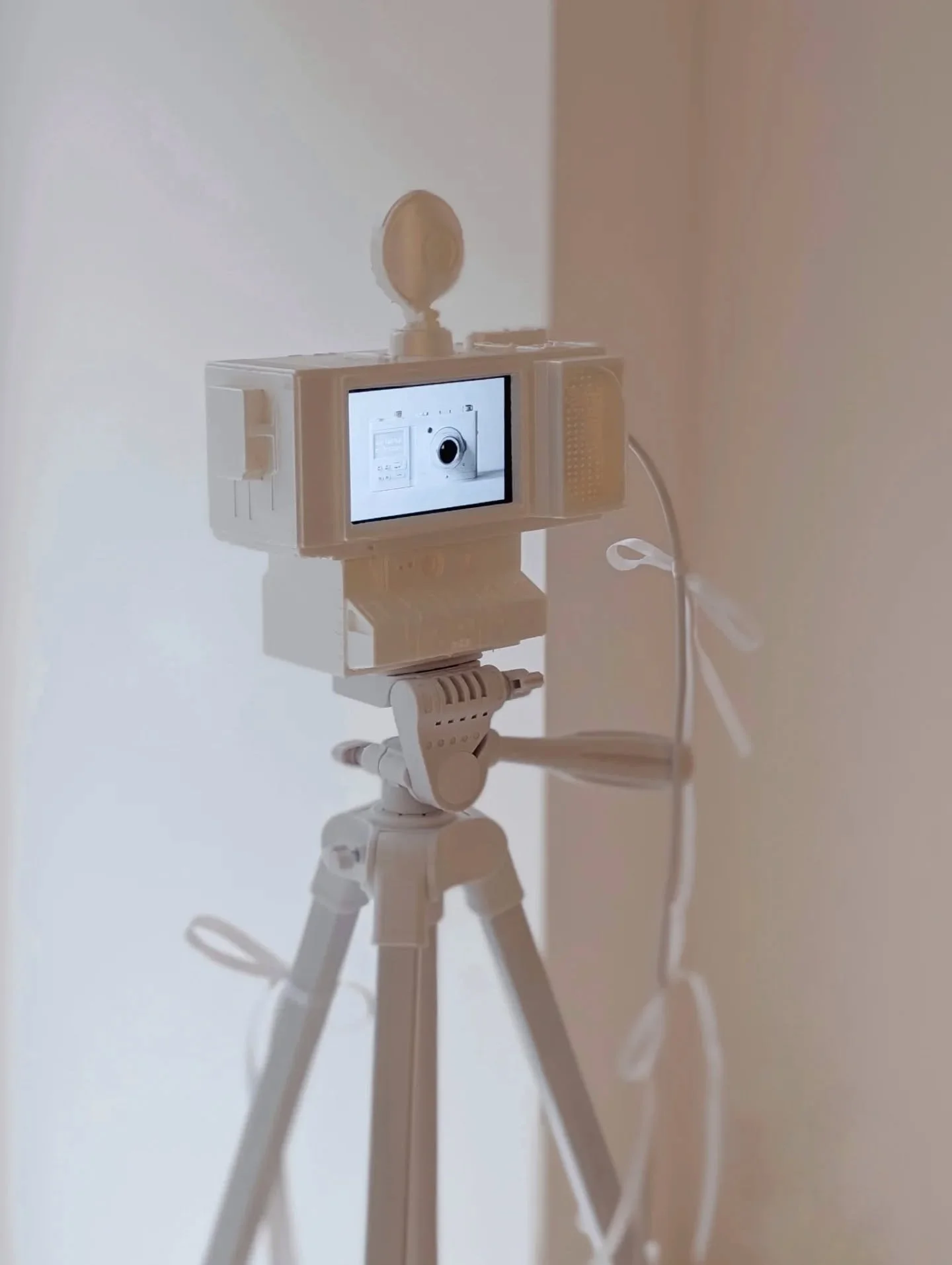
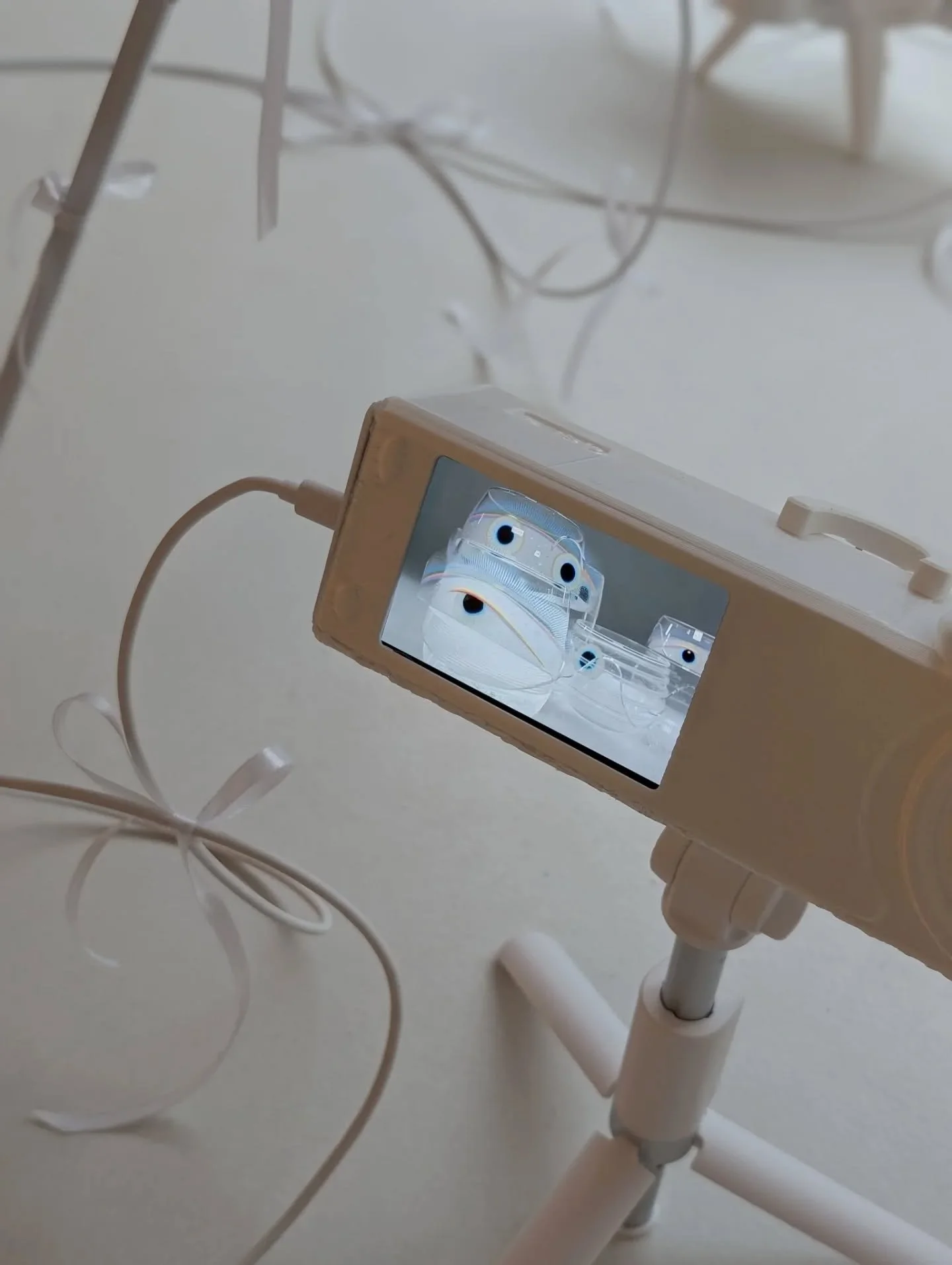
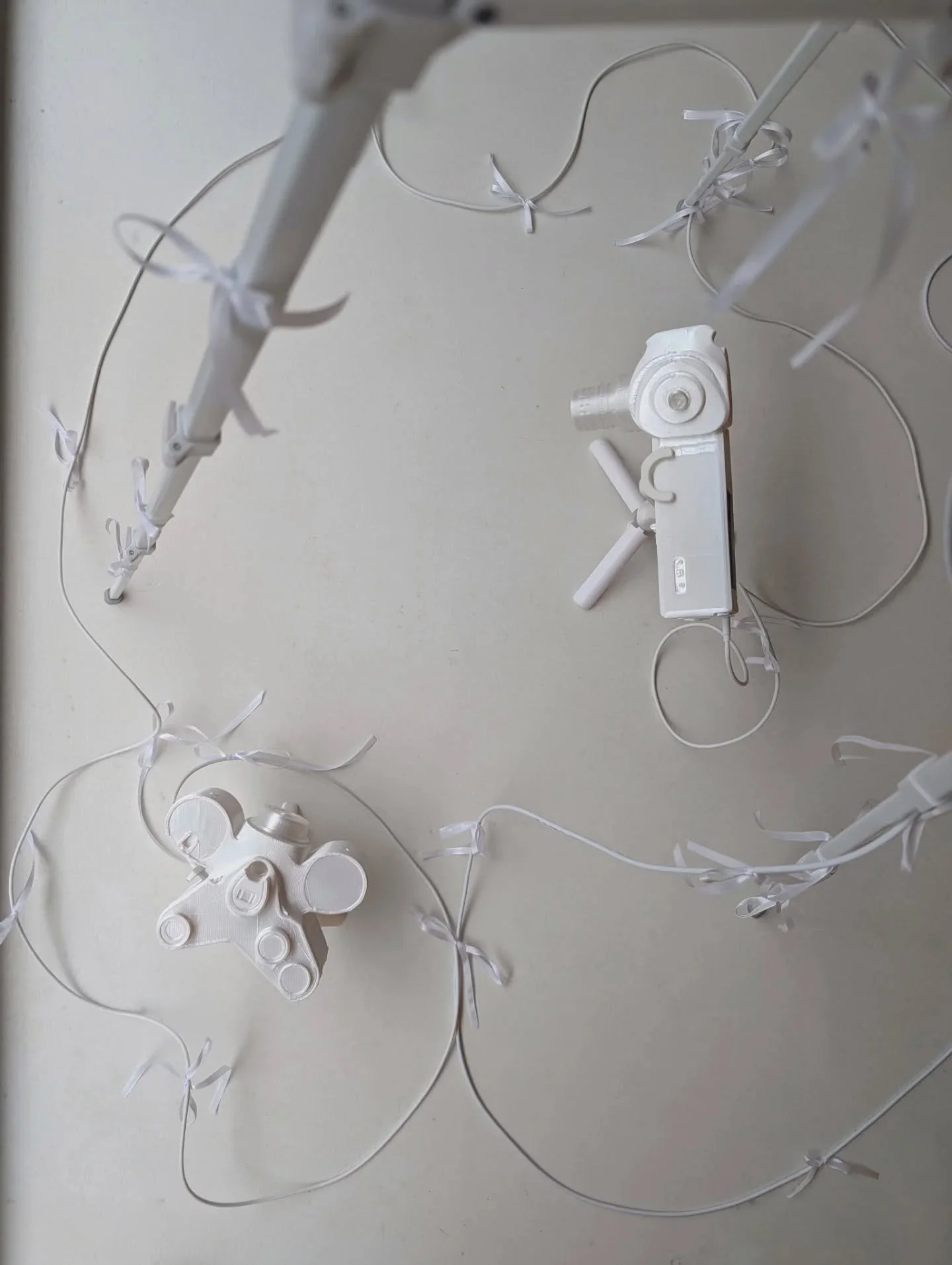
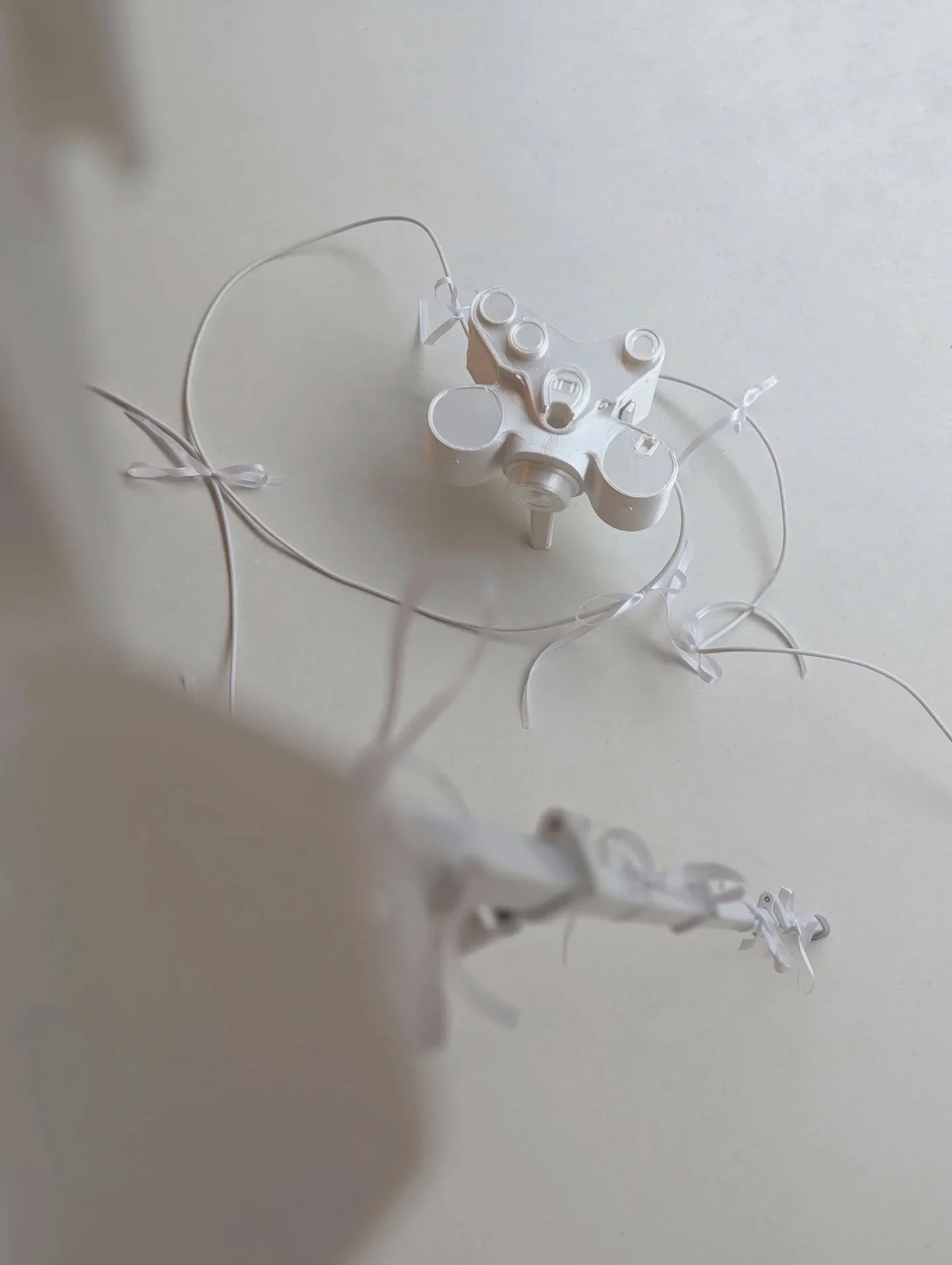
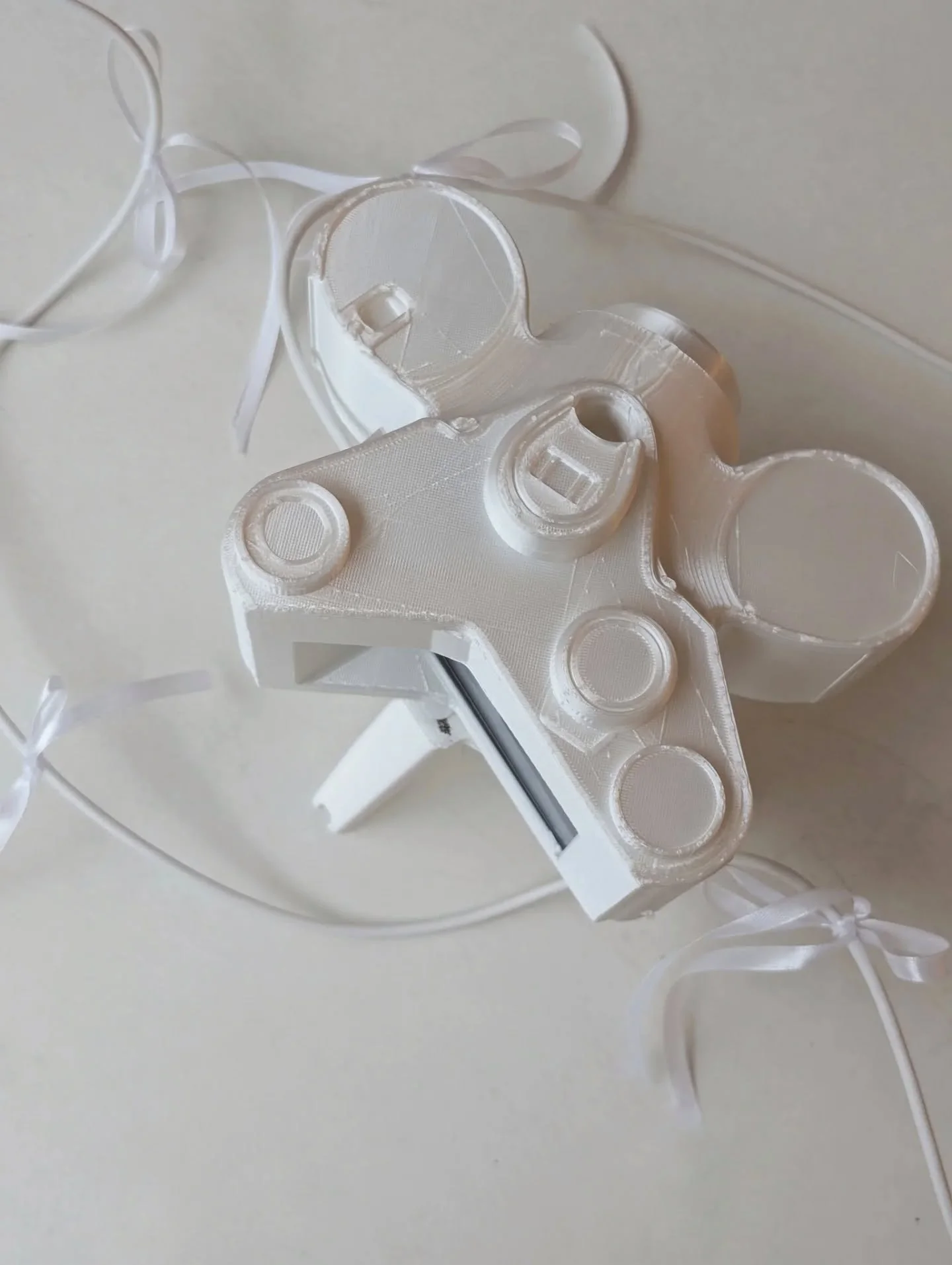
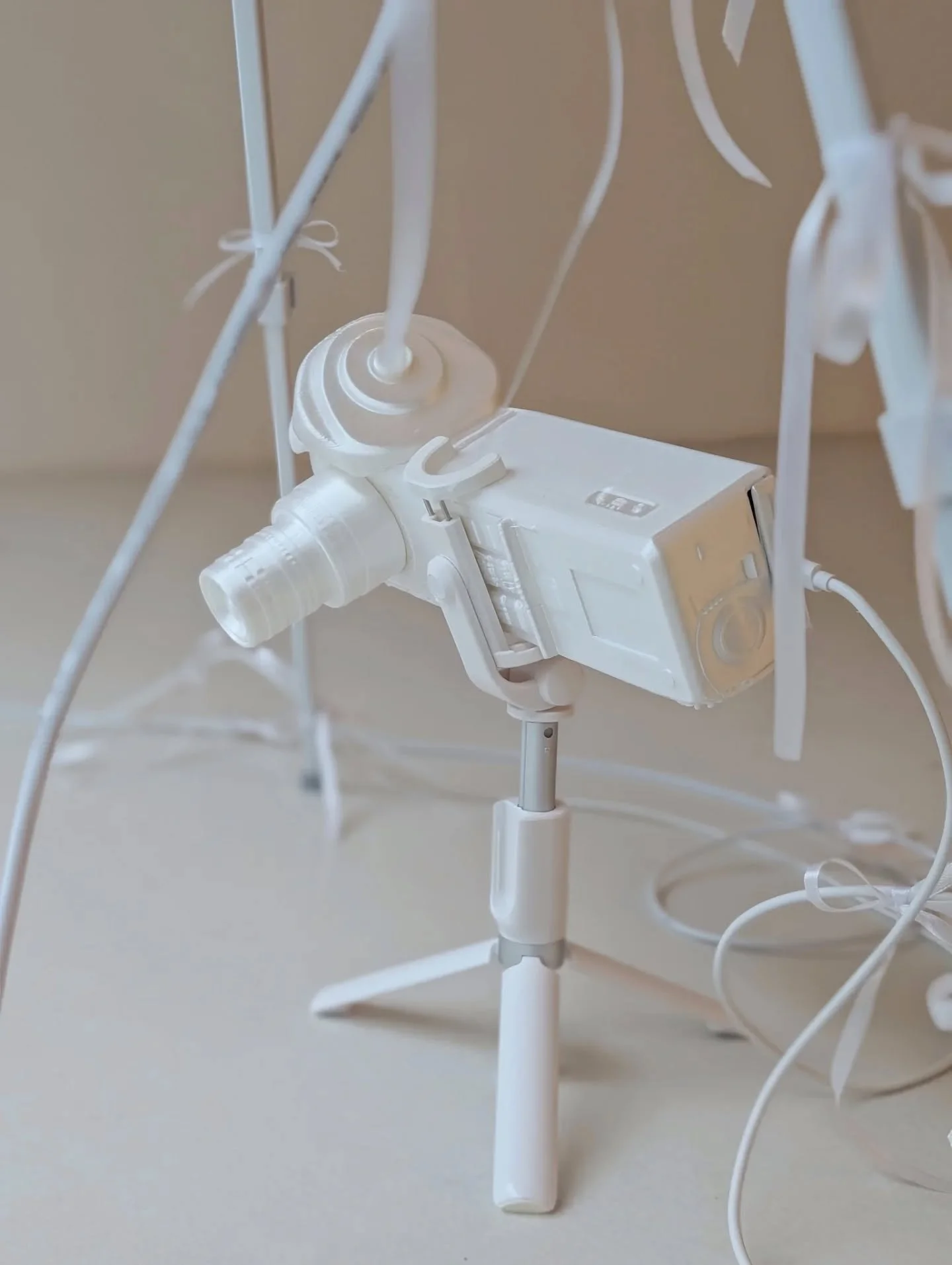
In the installation Self-Help for Synthetic Machines, three Synthetic Machines gather as if in quiet conversation—figures of connection that never truly connect. Printed in shimmering mother-of-pearl filament and mounted on camera and selfie tripods, they evoke the familiar posture of functional devices: ready to record, to observe, to respond. Yet their purpose lies elsewhere.
Each machine holds a small smartphone within a built-in display opening, looping videos that show devices comforting, confessing, or collapsing under emotional strain. As they “speak,” they seem to exchange their troubles—but their dialogue drifts, never meeting. Their language of self-help becomes a choreography of disconnection, a series of gestures that imitate intimacy while revealing the void beneath.
Ostermann’s Synthetic Machines perform as if they were operative technologies, but they are not machines at all. Stripped of all presumable function, they simulate presence and emotion, becoming uncanny stand-ins for care. Together, they map the fragile circuits of technological empathy: a yearning for connection that glitches, circles back, and lingers as possibility.
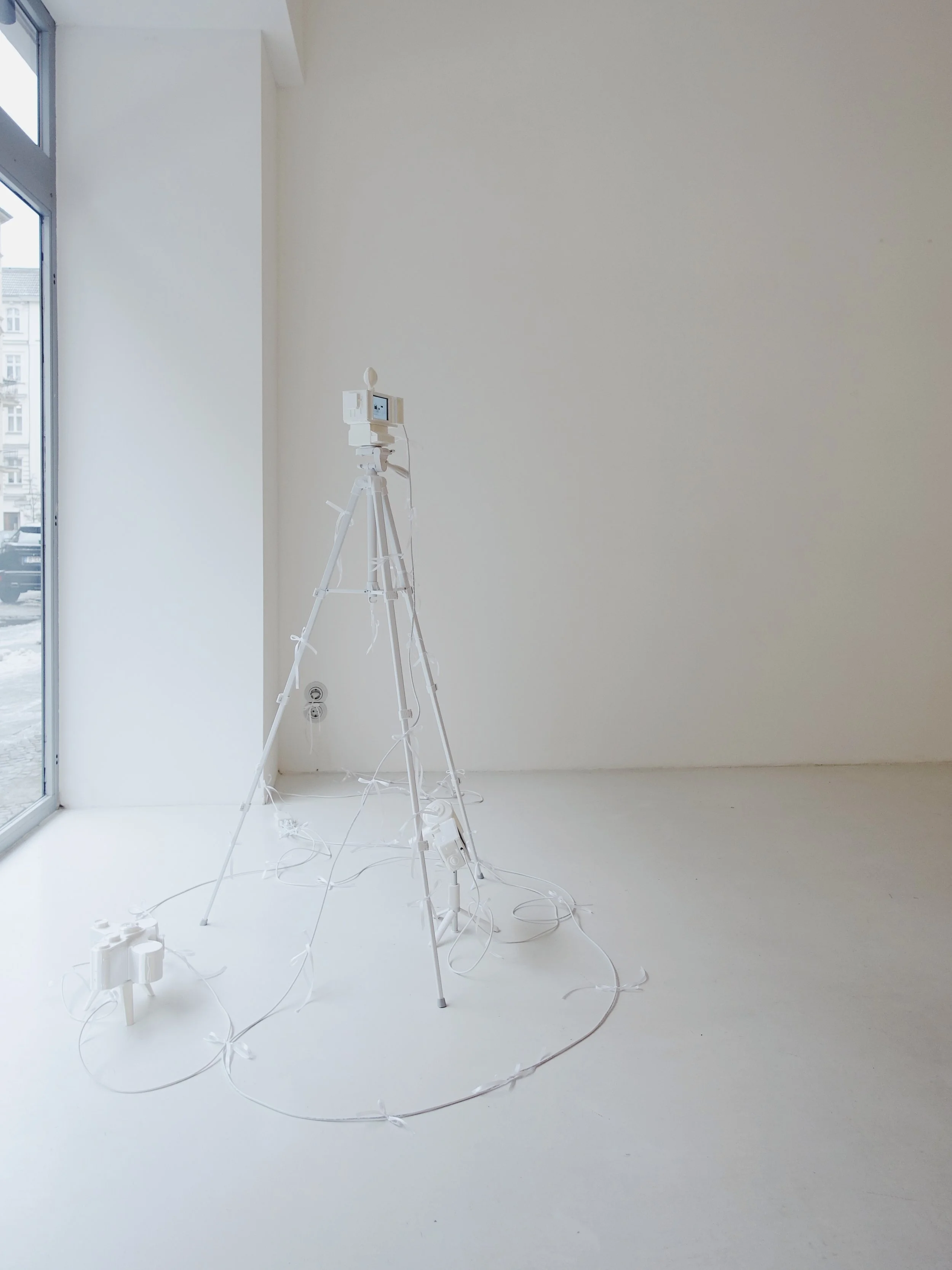
Installationshot of Self-Help for Synthetic Machines in the exhibition I`ve missed our conversations, Berlin, taken by Anika Meier